🔕 The Zero-BS Pledge
An open contractAspirant to aspirant.
Serious preparation happens in quiet libraries and long hours of focus. We refuse to treat you like a casual scroll-addict.
- 🚫Zero Mid-Day Panic: No clickbait headlines, no fake urgency alerts, no course upsells.
- 🚫Zero Visual Clutter: No ad banners squeezed between your study cards.
- 🔕Silent Morning Digest Only: At most, one quiet ping at 7:30 AM. No sound, no buzz.
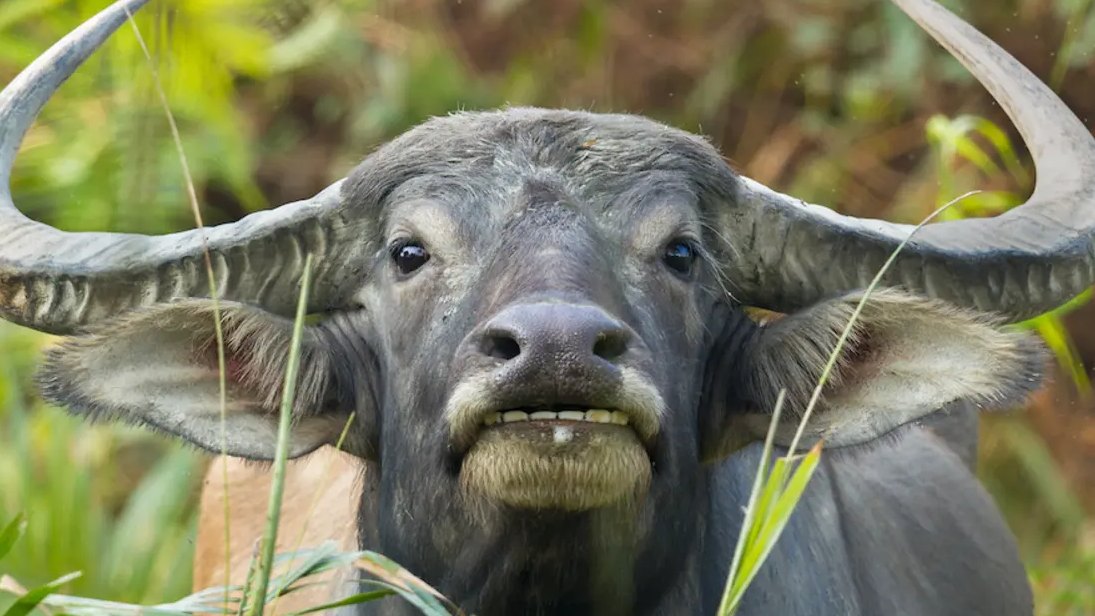
Translocate, keep in enclosures: Chhattisgarh bid to save its wild buffaloes from extinction
•To prevent local extinction of its state animal, Chhattisgarh is translocating wild water buffaloes from Assam into protected enclosures across sanctuaries like Udanti Sitanadi and Indravati. •IUCN Status: Endangered. •Wildlife Protection Act, 1972: Schedule I (highest protection). •Population distribution: India hosts over 90% of the global wild water buffalo population (3,500–3,700), mostly concentrated in Assam.
Translocate, keep in enclosures: Chhattisgarh bid to save its wild buffaloes from extinction
- Key Sanctuaries/Reserves in Chhattisgarh: Udanti Sitanadi Tiger Reserve, Indravati Tiger Reserve, Pamed Wildlife Sanctuary, and Barnawapara Wildlife Sanctuary.
- Threats: Poaching, shrinking habitat, retaliatory killings, and genetic contamination through mating with domestic buffaloes.

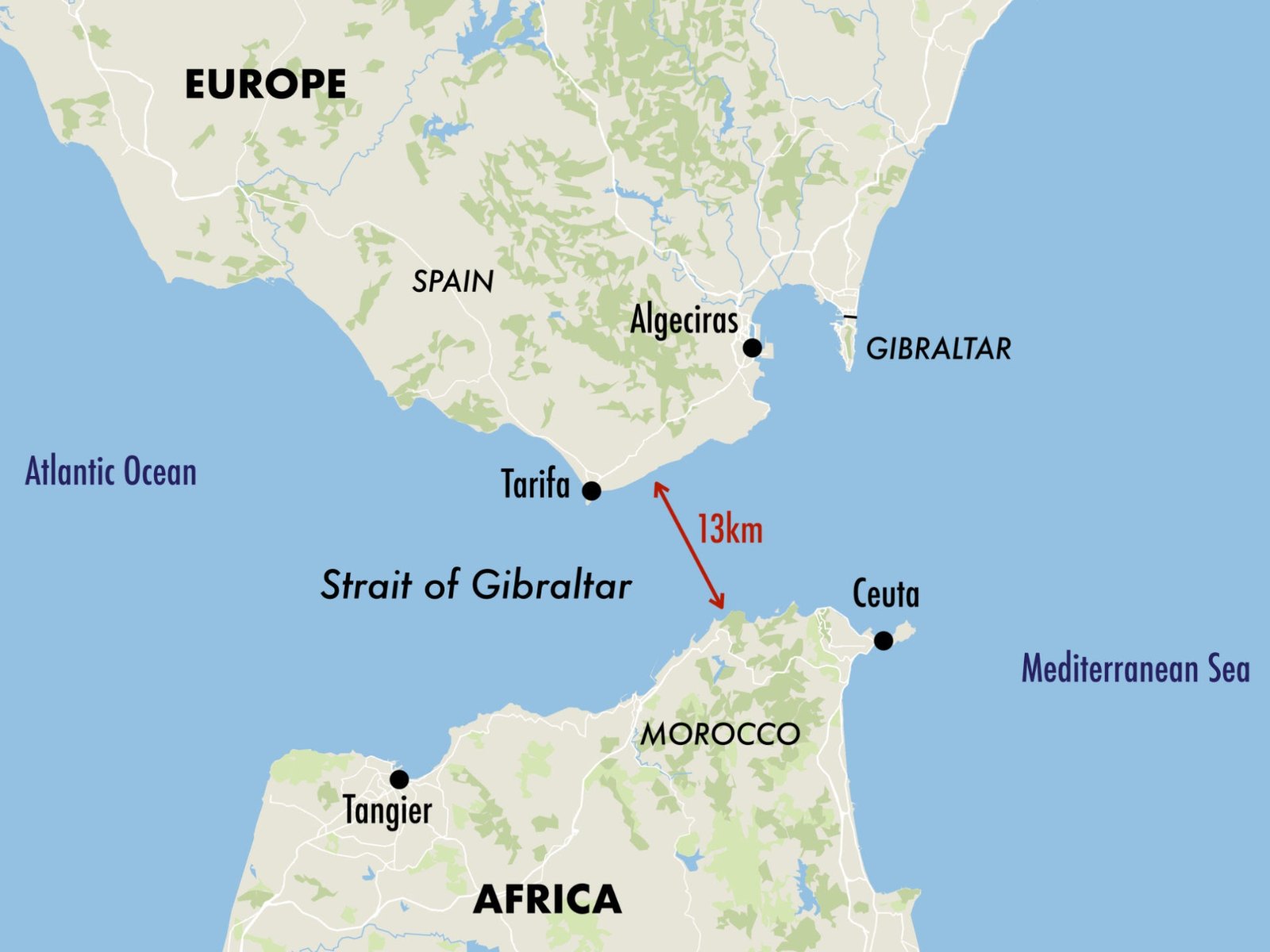
Ceuta
→Political Status: An autonomous city belonging to Spain since 1580 which lies in the African Continent. →Geographic Location: Located on the northern coast of the African continent, bordering the Mediterranean Sea. Strategic Waterway: Situated on the eastern approach to the Strait of Gibraltar (which connects the Atlantic Ocean to the Mediterranean Sea). →Land Borders: Shares its only land border with Morocco. Together with Melilla, it forms the only land border of the European Union on the African continent.
Ceuta
- Geographic Location: Located on the northern coast of the African continent, bordering the Mediterranean Sea. Strategic Waterway: Situated on the eastern approach to the Strait of Gibraltar (which connects the Atlantic Ocean to the Mediterranean Sea).
- EU Status: Part of Spain and the EU, but maintains special customs and border arrangements outside full Schengen integration.

For doxxing victims in India, a patchwork of laws to navigate
→Doxxing : releasing private personal information to intimidate or humiliate individuals. lacks an explicit definition or penal provision in Indian criminal law. →Victims must navigate a patchwork of statutes including the Bharatiya Nyaya Sanhita (BNS) for stalking and intimidation, and the IT Act for privacy violations. →Under the IT Intermediary Rules 2021, platforms face strict compliance timelines to retain safe harbour immunity.
For doxxing victims in India, a patchwork of laws to navigate
Can be cited in GS-2 and GS-3 answers regarding cyber law gaps, women's online safety, digital privacy protection, and social media platform accountability.
→Section 78 of BNS addresses stalking, while Section 351 deals with criminal intimidation. →Section 79 of BNS punishes acts intended to insult the modesty of a woman or intrude upon privacy. →Section 66E of the IT Act criminalises publishing private body part images without consent, while Section 72A covers unauthorised information disclosure. →IT Rules 2021 mandate platforms to acknowledge complaints within 24 hours and resolve severe privacy violations within 36 hours to keep safe harbour protection.
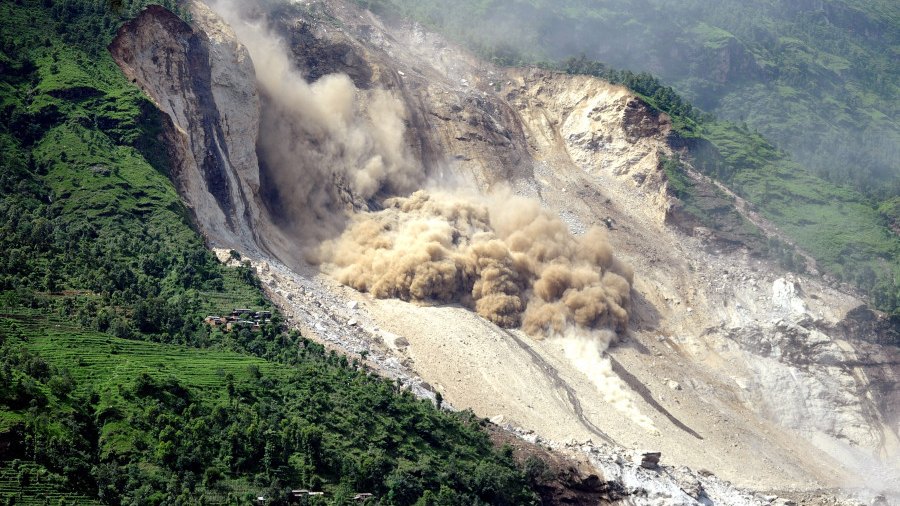
What makes Kerala particularly vulnerable to landslides
Kerala faces heightened landslide vulnerability due to extreme rainfall events and ecological fragility along the Western Ghats. Factors include conditioning elements like steep topography and loose soil, triggered by cumulative heavy rainfall from offshore troughs. Anthropogenic pressures such as quarrying, unscientific road construction, deforestation, and land-use changes further destabilize slopes, leading to severe disaster impacts.
What makes Kerala particularly vulnerable to landslides
Useful for answers on Disaster Management (GS-3) regarding landslide vulnerability, natural vs. anthropogenic causes, regional comparisons (Himalayas vs. Western Ghats), and sustainable eco-sensitive development models.
• ISRO's National Remote Sensing Centre (NRSC), Hyderabad, released a 'Landslide Atlas' tracking events from 1998 to 2022. • The database shows the Western Ghats recorded fewer landslide events than the Himalayan region, but Kerala accounted for a disproportionately high share of landslide fatalities. • Landslides result from conditioning factors (soil topography, geology, slope angles) and triggering factors (intense rainfall, anthropogenic activities). • Offshore troughs along the west coast and strong southwesterly winds across the Arabian Sea intensify monsoon rainfall in Kerala.

Between growth haves, have-nots, mind the lag
→ Status of Inequality : Per World Inequality Lab reports, India exhibits severe disparity, with the Top 1% holding ~22.6% of national income and ~40.1% of total wealth. . → With traditional upward mobility pathways like IT threatened by AI and manufacturing lagging in job creation, employment is concentrating in low-productivity gig roles. → Drivers: Jobless economic growth, heavy informalization, and low public investment in human capital (~3% GDP on education, ~2.1% on healthcare). → Constitutional Mandate: Violates Articles 38 & 39 (DPSP), which mandate minimising income gaps and preventing concentration of wealth.
Between growth haves, have-nots, mind the lag
Can be cited in GS-3 Economy answers concerning Income Inequality, K-shaped Economic Growth, Jobless Growth, Gig Economy, and challenges in harnessing the Demographic Dividend.
→ Individuals earning over Rs 100 crore increased from 142 (2021-22) to 576 (2025-26). → Periodic Labour Force Survey (PLFS) estimates average regular employee wages at Rs 22,699/month. → Average daily wage for casual labour stands at Rs 453 as per PLFS 2025 data. UBS Global Wealth Report 2026 pegs India's dollar millionaires at 9,44,000.

A new compact between AI & agriculture: An Andhra Pradesh opportunity
Google's planned 1-GW AI data center in Visakhapatnam requires 24 GWh daily power. To prevent grid strain and environmental damage, Agrivoltaics (solar panels on farmland) offers a sustainable alternative. Leveraging Andhra Pradesh's Deemed Distribution Licence policy, Google can co-invest with farmers, creating a captive solar enterprise that boosts farm incomes, provides clean energy, and prevents land conflict.
A new compact between AI & agriculture: An Andhra Pradesh opportunity
Serves as a case study in GS-3 (Renewable Energy, Agriculture, & Economic Development) illustrating how high-tech infrastructure investments can be integrated with rural land rights to boost farmer incomes through Agrivoltaics.
→ In the agri-photovoltaics system, solar panels are mounted at about 10 to 12 feet to enable seamless cultivation of high-value crops beneath them. → In such agri-photovoltaic systems, solar energy is virtually the third crop and augments farmers’ incomes (eight to 10 times in ICRIER pilots). → Beyond producing renewable energy, agrivoltaics would enable farmers to grow two irrigated crops beneath the panels, diversify into higher value shade loving crops, undertake value addition through processing, and earn recurring revenue from electricity sales to the Google data centre.
ISRO & Japanese scientists review mission Chandrayaan-5 preparation
ISRO and Japan’s Aerospace Exploration Agency (JAXA) held joint discussions to review progress on Chandrayaan-5, also known as the Lunar Polar Exploration Mission (LUPEX), scheduled for 2028. Launched on Japan’s H3 rocket, ISRO is building the lander while JAXA provides the rover. Payloads from NASA and ESA will help study lunar water-ice over a 100-day mission.
ISRO & Japanese scientists review mission Chandrayaan-5 preparation
- Chandrayaan-5 is also named LUPEX (Lunar Polar Exploration Mission), a joint ISRO-JAXA project.
- ISRO is developing the lander module; JAXA is building the rover and providing the H3 launch vehicle.
- Mission duration on the lunar surface is planned for 100 days (approx. 3.5 months).
- NASA (neutron spectrometer) and ESA (mass spectrometer) are participating by providing scientific payloads for the rover.
- Primary objective is investigating water and water-ice on the lunar surface and subsurface at the South Pole.
Serves as an example of multilateral space collaboration, deep-space exploration capabilities, and technology sharing in GS-3 Science and Technology.
ISRO and Japan’s Aerospace Exploration Agency (JAXA) held joint discussions to review progress on Chandrayaan-5, also known as the Lunar Polar Exploration Mission (LUPEX), scheduled for 2028. Launched on Japan’s H3 rocket, ISRO is building the lander while JAXA provides the rover. Payloads from NASA and ESA will help study lunar water-ice over a 100-day mission.
ISRO's NavIC system can no longer provide navigation data independently: Govt
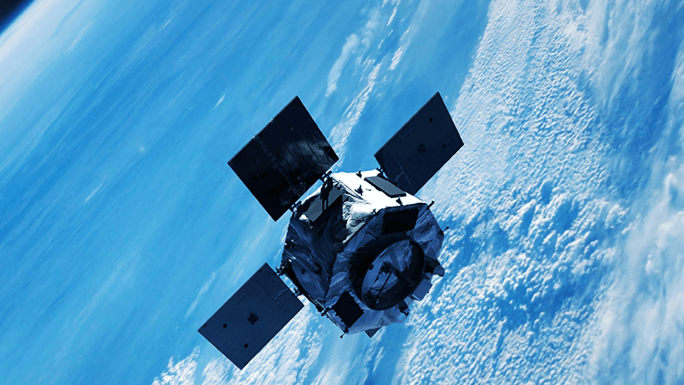
The Union Government informed Parliament that ISRO's NavIC (IRNSS) cannot currently provide standalone positioning services independently. Following the end of life of IRNSS-1F, only three satellites remain operational for Positioning, Navigation, and Timing (PNT) services—IRNSS-1B, IRNSS-1I, and NVS-01—below the required minimum of four. However, timing services and emergency messaging remain operational.
ISRO's NavIC system can no longer provide navigation data independently: Govt
- A minimum of four operational satellites in orbit are required to provide basic 3D positioning services in a GNSS/RNSS system.
- Currently operational PNT satellites in NavIC: IRNSS-1B, IRNSS-1I, and NVS-01.
- NavIC (IRNSS) is designed to cover the Indian subcontinent and an area extending up to 1,500 km around it.
- NavIC continues to provide accurate timing signals and emergency message broadcasting even when standalone positioning is constrained.
- Next-generation satellites (NVS-03, NVS-04, NVS-05) are planned to restore and augment constellation capabilities.
Useful for GS-3 Science & Technology answers on indigenous technology, space infrastructure resilience, challenges in regional satellite navigation systems, and the strategic importance of GNSS self-reliance.
Appoint Polar Ambassador, join Arctic Council, suggests panel
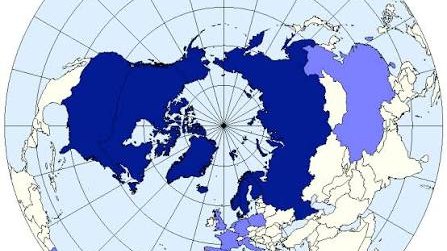
The Parliamentary Standing Committee on External Affairs recommended that India appoint a dedicated Polar Ambassador to strengthen its polar diplomacy. It urged the government to seek full membership in the Arctic Council, where India is currently an observer with limited powers. The panel also suggested re-engaging Russia for Arctic scientific research and accessing its research stations.
Appoint Polar Ambassador, join Arctic Council, suggests panel
- Arctic Council full membership is restricted to 8 Arctic nations (Canada, Denmark, Finland, Iceland, Norway, Russia, Sweden, and the US).
- India is currently one of the 13 Observer countries in the Arctic Council.
- Observer nations in the Arctic Council lack decision making powers and cannot make direct financial contributions or conduct independent research directly in the Arctic.
Useful for answers on India's Arctic Policy, foreign policy architecture, polar diplomacy, and multilateral engagement under GS-2 (International Relations).
‘How are you keeping unelected minister?’ SC asks Bihar govt
The Supreme Court questioned the Bihar government over the re-appointment of an unelected minister beyond the six-month constitutional limit under Article 164(4). The petition highlighted that re-appointing a non-legislator upon a change of cabinet without an intervening election circumvents constitutional safeguards, representative democracy, and electoral accountability.
‘How are you keeping unelected minister?’ SC asks Bihar govt
- Article 164(4) specifies that a Minister who is not a member of the State Legislature for six consecutive months ceases to be a minister.
- Corresponding provision for Union Ministers is Article 75(5).
- Supreme Court in S.R. Chaudhuri v. State of Punjab (2001) held that re-appointment of a non-member minister without election during the same term is unconstitutional.
GS2 - Illustrates issues concerning constitutional morality, executive accountability, circumvention of constitutional provisions, and judicial enforcement of democratic principles.

Ravidas: Icon of Dalit resistance
Guru Ravidas was a 15th–16th century Bhakti saint born near Varanasi who belonged to the leather working community. He composed poetry in 'Sadhukari'—a blend of Awadhi, Braj, Khari Boli, Punjabi, Rajasthani, and Sanskrit. Envisioned 'Begumpura' (a city without sorrow), representing a caste-free, classless, and tax-oppression-free society. 40 of his hymns (shabads) and one shloka are included in the Guru Granth Sahib. Associated with the Ad Dharm movement of the 1920s and the modern Ravidassia community, concentrated largely in Punjab's Doaba region.
Ravidas: Icon of Dalit resistance
Useful for GS-1 (Art & Culture / Indian Society) to illustrate the role of Bhakti Movement saints in social reform, anti-caste egalitarian philosophies, and non-violent Dalit assertion.
New paper leak Bill
Parliament passed the Public Examination (Prevention of Unfair Means) Amendment Bill, 2026, introducing stricter penalties to combat examination malpractices. Key provisions mandate establishing fast-track courts with a five-month deadline for investigation and trial and empowering the Union government to set up Special Task Forces. Amends the Public Examination (Prevention of Unfair Means) Act, 2024.
New paper leak Bill
Can be cited in GS-2 answers on Governance, Administrative Reforms, and Government Policies regarding institutional transparency, curbing corruption in recruitment, and securing meritocracy.
Amends the Public Examination (Prevention of Unfair Means) Act, 2024. Applies to exams by UPSC, SSC, Railway Recruitment Board, IBPS, and National Testing Agency (NTA). Use of unfair means by an individual: Imprisonment is increased to 5 to 10 years (up from 3 to 5 years), and the fine is raised to up to ₹50 lakh (up from ₹10 lakh). Service provider fine raised to Rs 5 crore with an 8-year ban from public examinations. Organised crime penalty enhanced to a minimum 7 years imprisonment and fine of Rs 10 crore. Mandates a 5-month timeline for investigation and trial through fast-track courts. Provides statutory backing for establishing a Special Task Force (STF) for investigations. Key Issues : The mandatory 3-month limit to complete trials may conflict with Supreme Court rulings (e.g P. Ramachandra Rao, 2002), which held that rigid outer time limits for concluding criminal trials are judicially impermissible , Lack of Consequences for Delayed Investigation: Unlike laws like the SC/ST Act or Lokpal Act, the Bill does not specify procedural steps or accountability mechanisms if the 2-month investigation window is missed.